
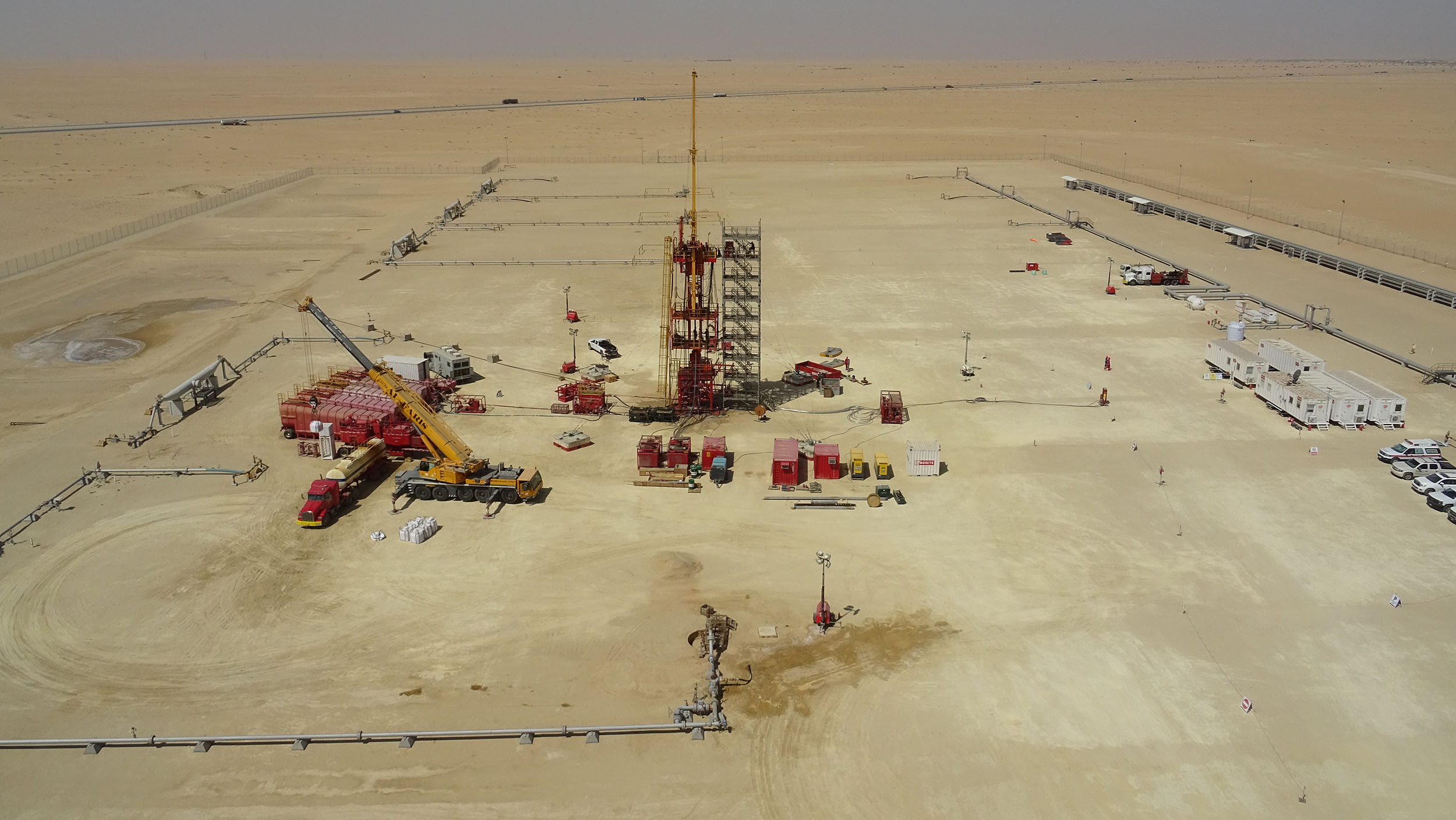
Lower carbon emissions through the reduced power requirements of an HWO
Download PDFProduction boost from underperforming assets through workover services
Middle East

A Middle East operator developed a strategy to maximize mature field workover service resources while mitigating carbon emissions by adopting new workover solutions. To achieve responsible long-term growth, the operator sought alternative workover solutions to meet their objectives.
The operator faced challenges with the availability of conventional drilling rigs and demands to prioritize drilling activities over workovers. Additional limits were imposed by the large footprint of drilling rigs and constraints with pad-well installation.
The desire to boost production by rejuvenating underperforming assets through intervention presented various workover concerns. Issues such as well integrity, downhole ESP failure, and wellbore obstructions were impacting production.
Additionally, existing flowline configurations on producing well-pad locations interfered with the installation of larger footprint drilling rigs, preventing workover operations.
Early engagement with the operator’s stakeholders facilitated collaboration on the benefits of alternative workover solutions.
Halliburton used its global track record of hydraulic workover (HWO) services to build the operator’s confidence in the potential for effective mature well remediation to address these challenges.
To meet the requirements of this project, Halliburton designed and manufactured a new 460,000-lbf pulling capacity workover and snubbing rig package to deliver the scope and meet expectations for performance and safety
Candidate wells were selected to confirm the proof of concept, and KPIs were set to validate the benefits, logistics, and capability to execute challenging workovers and live well interventions.
The customized and flexible HWO unit has proven to be an effective solution and allowed the operator to accomplish workover operations with quantifiable time and cost benefits. This enabled the operator to identify optimization opportunities and broaden the HWO operational scope.
